Selection Guide
Parallel Gripper Selection Guide
Parallel grippers are common in machine tending, assembly, loading, inspection and general handling. The difficult part is not deciding that a parallel gripper may be useful. The difficult part is describing the workpiece, machine and process clearly enough for engineering review.
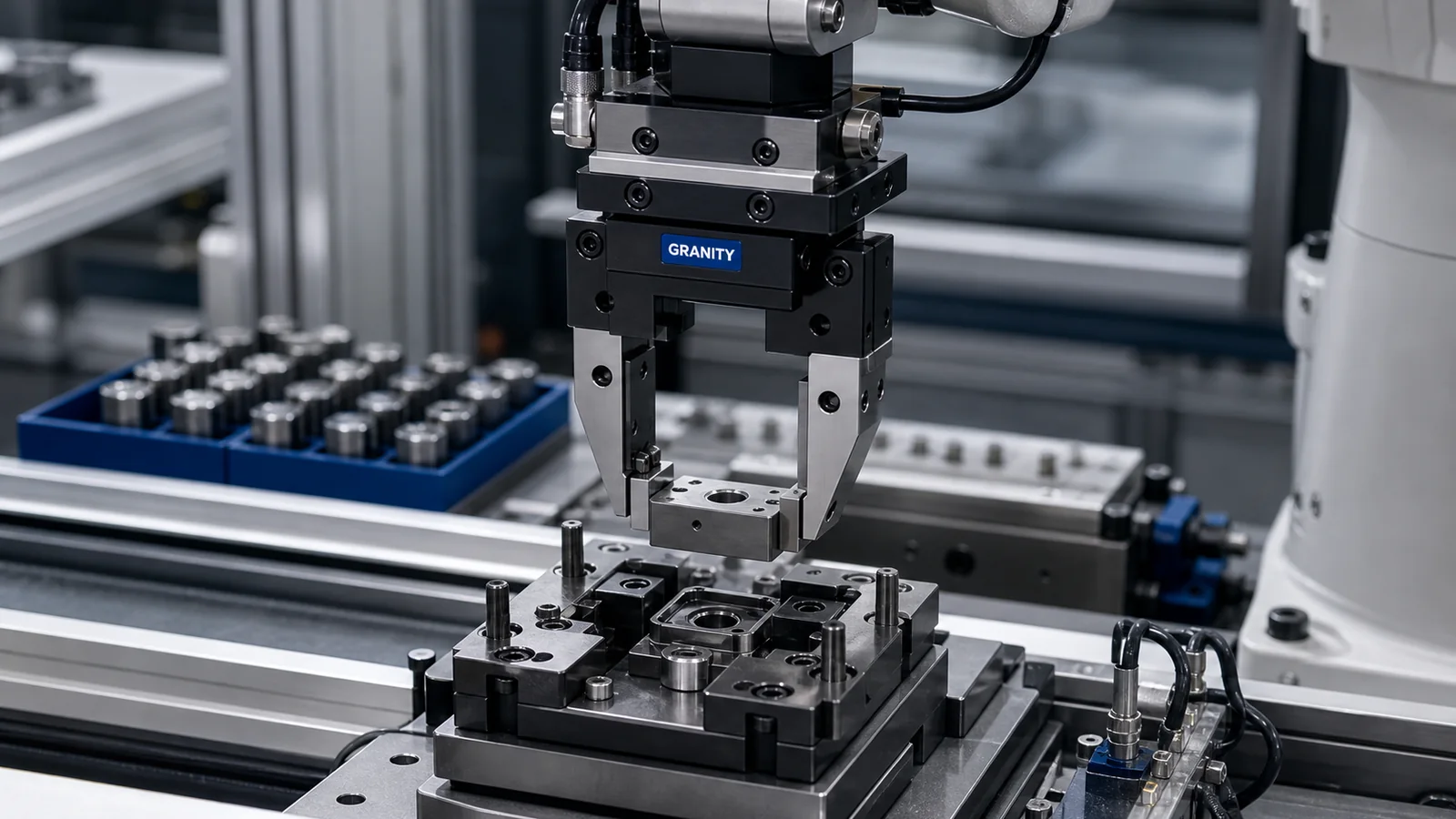
This guide explains the selection logic engineers should prepare before requesting a recommendation or quote. It does not provide universal grip-force numbers, model claims or guaranteed performance values because those decisions depend on verified product data and application conditions. Instead, it gives a practical structure for communicating requirements.
1. Start with the workpiece
The workpiece is the starting point for every gripper discussion. Engineers should define the part shape, material, approximate mass, surface condition, orientation, sensitivity and whether the part changes across variants. A simple rectangular metal blank, a machined casting, a plastic housing, a glass component and a small electronics part all create different selection concerns.
Workpiece geometry determines jaw contact, stroke requirement and whether the grip is internal, external, friction-based or form-fit. Surface sensitivity determines whether standard hard jaws are acceptable or whether protective pads, custom fingers or contact-area changes are needed. If the workpiece is oily, hot, wet, dusty or delicate, that condition should be stated early.
2. Define the gripping approach
Parallel grippers move opposing jaws in a linear path. That makes them useful when the workpiece can be held by two opposing surfaces and when the jaw travel is sufficient for clearance. The basic question is whether the gripper will pick from the outside, expand from the inside, locate the part against a stop, or stabilize a part during another process.
Engineers should describe whether the gripper must lift, transfer, insert, hold for inspection, rotate with a robot, resist acceleration, or simply position a part for a short handling step. Holding a part vertically during robot motion is different from stabilizing a part on a fixture. A credible selection request should always include the actual task.
3. Stroke is about clearance, not only part size
Stroke is often misunderstood. The required opening is not just the nominal workpiece width. It also includes clearance for approach, part variation, jaw finger thickness, tolerance stack-up and safe release. If the robot or actuator approaches from an angle, additional clearance may be needed to avoid collision with nearby features.
When possible, provide a simple sketch or CAD screenshot showing the part, target grip location and nearby obstructions. This is more useful than a short statement such as “need a small gripper.” GRANITY Engineering can review the context more effectively when the clearance envelope is visible.
4. Grip force depends on the process
Grip force cannot be selected responsibly from part weight alone. Acceleration, orientation, coefficient of friction, jaw shape, safety factor, air pressure, cycle dynamics and allowable part deformation all matter. Fragile materials may require lower contact stress and larger jaw contact area. Heavy or oily metal parts may require more secure mechanical location.
For an inquiry, provide the part mass, motion direction, robot or actuator movement, process speed expectation and whether the part may be affected by marks or compression. If the part is fragile, state what kind of damage is unacceptable. This helps engineering avoid recommendations that would be mechanically strong but commercially unsuitable.
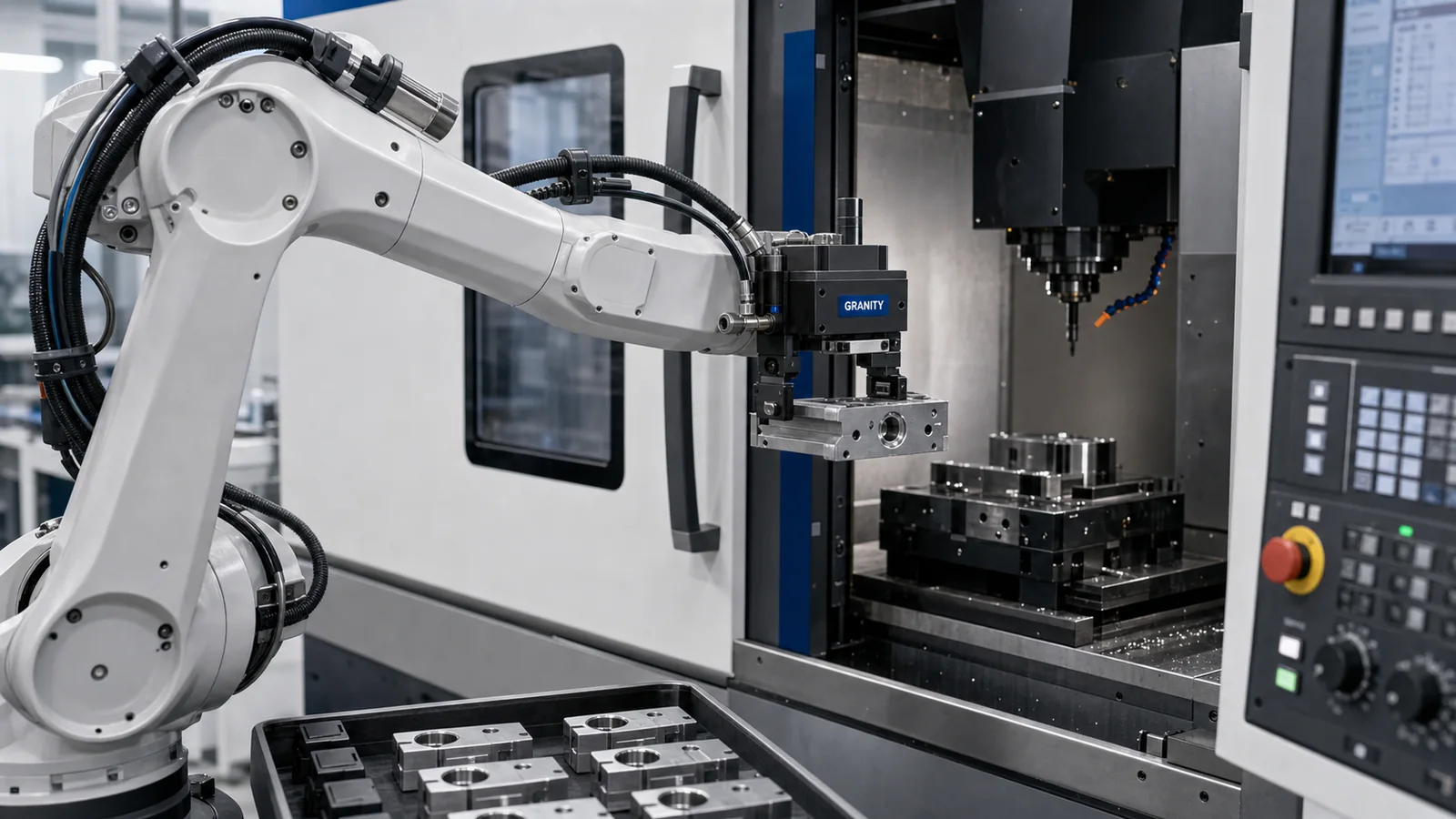
Engineers should review jaw reach, workpiece variation, fixture clearance and machine access before requesting CAD or a quote.
5. Jaw design is part of the solution
The gripper body is only one part of the system. Jaw fingers often determine whether a gripper actually works in production. Jaw length affects moment load. Contact geometry affects stability. Material and surface finish affect friction and wear. Long fingers can amplify loads and reduce practical capability even when the gripper body seems appropriate.
Before requesting a quote, define whether jaws will be customer-made, supplier-provided, soft, machined, replaceable or dedicated to one product. If jaw design is unknown, share the intended grip surfaces and ask for review rather than assuming a standard finger will solve the application.
6. Machine and robot context
Parallel grippers are used with robots, gantries, pneumatic slides, indexing systems and custom machines. The mounting interface, available space, cable or hose matching and control method should be discussed early. A compact gripper may still be unsuitable if its ports, sensors or mounting holes conflict with the machine layout.
If the gripper will be installed on a robot, provide payload context, wrist orientation, tool stack-up and expected motion. If it will be installed inside a machine, provide the available envelope and access restrictions. In tight automation cells, physical integration can be more important than theoretical capacity.
7. Sensor and feedback requirements
Some applications require only open-close motion. Others require confirmation that a part is present, a jaw reached position, or a process step is complete. Sensor needs should be stated in the inquiry because they affect product choice, wiring, controller integration and troubleshooting.
Do not treat sensors as an afterthought. A gripper that can hold the part may still fail the process requirement if the machine cannot confirm part presence or detect misloads. For automated production, reliable feedback can be as important as mechanical holding.
8. Environment and duty cycle
State whether the gripper operates in coolant mist, dust, chips, clean assembly, heat, washdown, static-sensitive areas or general factory conditions. Also describe the expected number of cycles per shift or day if known. Environment and duty cycle influence sealing, lubrication, material choices and maintenance expectations.
Cycle-life details should be based on confirmed product data. Environment and duty information still helps engineering decide which product family and review sequence are appropriate.
9. What to include in an RFQ
A strong RFQ includes: product group, workpiece drawing or image, material, approximate mass, grip location, application task, machine type, required quantity, project timeline, CAD or datasheet request, and any constraints around marks, space, speed or environment.
If a model code is already known, include it. If not, describe the application clearly. A good application description can be more valuable than an uncertain model request.
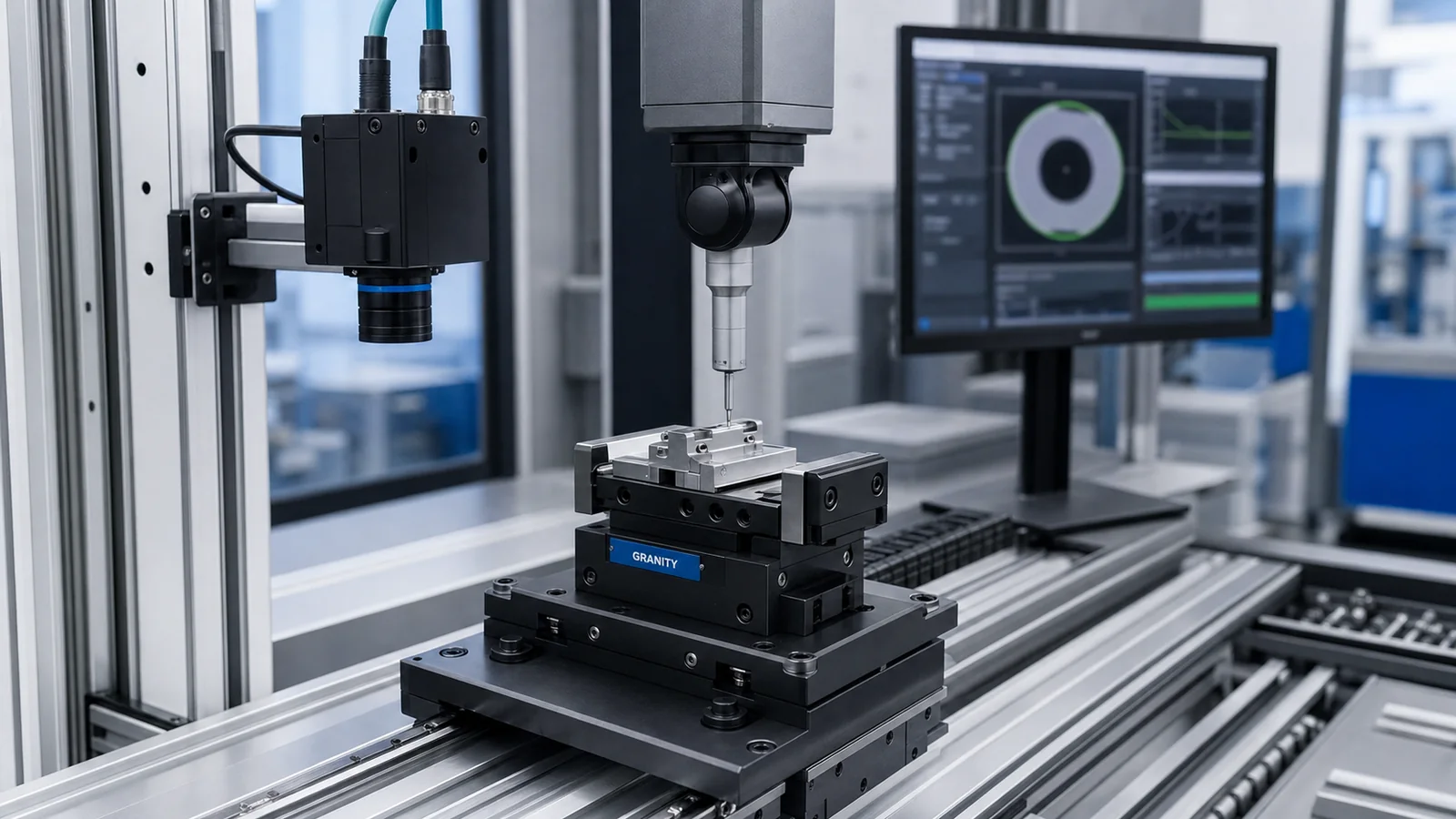
Before sending a quote request, connect the gripper choice to inspection, loading, fixture handoff and confirmation requirements.
10. Common selection mistakes
Common mistakes include selecting by jaw opening alone, ignoring jaw length, assuming part weight is enough to determine grip force, overlooking part surface sensitivity, forgetting sensor requirements and requesting CAD before the application is clear. Another common mistake is treating a prototype success as proof of production reliability without checking duty cycle and process variation.
Engineers can reduce risk by sharing context early. The right selection direction is usually found by combining workpiece information, process requirements, machine constraints and commercial needs.
11. How to use CAD during selection
CAD is useful when it supports integration review, not when it is treated as proof that a model is already correct. A CAD model helps engineers check mounting space, jaw reach, collision areas, hose matching, sensor position and robot tool stack-up. It does not by itself confirm grip force, part stability, surface protection or production durability.
When requesting CAD, describe the purpose of the file. If the CAD is needed for robot reach simulation, say so. If it is needed for fixture clearance, include the fixture area. If it is needed for concept layout only, explain that the layout is not final yet. This makes the CAD request more useful and helps GRANITY avoid releasing the wrong type of file.
12. How buyers should evaluate a gripper request
Purchasing teams often receive a model number and quantity without the engineering background. That can slow quoting because sales must ask the engineer for missing information. A better buying request includes the commercial need and the technical reason behind it. The product group, application, expected quantity, destination country, project timing and drawing status should be visible in the first RFQ.
If the purchasing team is comparing alternatives, the comparison should be based on application fit, engineering support, documentation availability, delivery support and long-term service expectations. Price matters, but a low price is not helpful if the selected gripper does not fit the machine or creates repeated support issues.
13. How integrators should prepare the conversation
System integrators usually need to protect both performance and project schedule. They should prepare a short application package that includes cell layout, robot model, target cycle logic, workpiece details, end-effector concept and expected customer acceptance criteria. Even a simple PDF with screenshots can be enough to start a meaningful engineering review.
Integrators should also state what is fixed and what can still change. If the robot, fixture or workpiece presentation is fixed, the gripper must adapt. If the jaw design or presentation method can change, engineering may have more options. This distinction helps prevent recommendations that solve one problem while creating another.
14. When to move from inquiry to RFQ
An inquiry should move to RFQ when the product family direction, application, quantity and timeline are clear enough for a quote. The model does not always need to be final, but the request must be specific enough for GRANITY to understand what is being quoted and what still needs engineering confirmation.
If the application still has major unknowns, start with Engineering Support. If the product family is clear and the commercial need is active, use Request a Quote. If the main need is geometry integration, request CAD or a datasheet through the CAD request form. Separating these requests keeps the response faster and more accurate.
Conclusion
A parallel gripper inquiry should communicate the manufacturing problem, not just a desired component. When the workpiece, movement, interface, environment and RFQ context are clear, GRANITY can recommend engineering support, CAD review or quote support more efficiently.
Recommended next steps
Use the product center to compare parallel, angular and centric gripping directions.
Open Gripping ModulesIf the jaw envelope or machine access is unclear, request CAD with the application details.
Open CAD LibrarySend workpiece, material, grip surface and process details before asking for final selection.
Contact EngineeringNeed support selecting a parallel gripper?
Send the application details and GRANITY will review the best next step.
Contact EngineeringRequest a Quote